
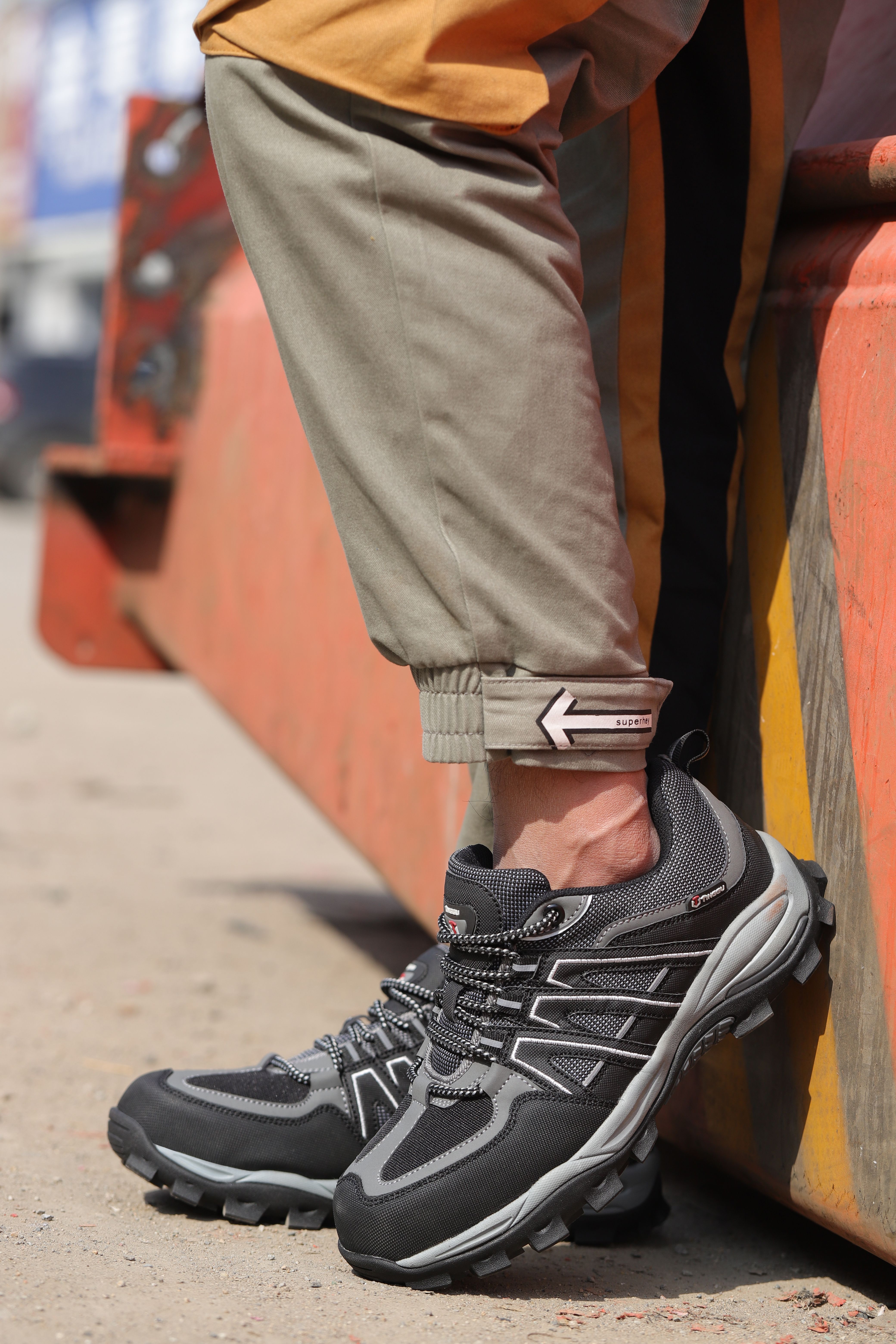
When you hear the words “safety boots” used, you probably don’t think of twirling ballerinas or epic feats of athletic endurance. So if the first image in your mind is a burly worker on a noisy industrial work site completing arduous tasks that might in the absence of steel toe caps leave their feet crushed under heavy machinery, don’t feel bad.
Why’s that? Because there’s absolutely no doubt that safety boots only exist because of the plentiful ways in which ordinary footwear leaves workers in the toughest of conditions dangerously exposed. Safety boots, for instance, are designed to protect against:
Heavy objects: The most obvious protection is from the toe-caps, which come in varying degrees of toughness.
Punctures: Sharp objects are all around the harshest of industrial and even commercial workplace environments, whether from the top, the sides or through the sole – like nails.
Cuts: Some safety boots are so cut-proof that even an accidental strike from a powerful chainsaw can be resisted.
Electrical hazards: Electricians ensure their safety boots are insulated against shocks, whilst others need non-conductive boots to resist static electricity as well as offer protection against water, chemical and flame incursion.
Slipping: If you think your ordinary footwear is slip-proof, try going head-to-head with modern safety boots that are specifically designed for the type of trips, slips and falls certain industrial workers are exposed to.
Tap into the passionate world of hiking, however, and you may eventually find even the most committed and knowledgeable adventurous swearing by some of the aforementioned protective qualities for their toughest trail expeditions.
Cushioning & support
For instance, while obviously tough, safety boots are also specifically designed to help workers get through their long days spent predominantly on their feet, thanks to special cushioning and arch support intended to alleviate muscle strain, minimize fatigue and reduce the risk of lower back issues caused by stress muscles.
Weather-handling
Other seasoned hikers, meanwhile, report their preference for some safety boots’ superior weather-handling qualities, like resistance to extreme cold and debilitating conditions such as hypothermia and frostbite. Waterproof safety boots can also be better at jumping puddles and dealing with all-day rain on the trails, while other hikers rave about the sturdy lower-leg support that can better for guarding against ankle twists.
The safety boot ‘fit’
We’ve also heard feedback from the hiking community about the differing fit of safety boots in a head-to-head with specialty hiking boots. The hiking boots’ typically tighter fit, for instance, can cause issues with blisters in some adventurers, while for some particularly harsh surfaces the hiker will use a safety boot due to the more durable sole.
So while the safety boot industry is unlikely to start directly marketing to the hiking and outdoor adventuring community, there’s no doubt that the right safety boot for the right set of feet really can be an impressive all-rounder. So no matter your workplace, industry or even the out-of-hour pastimes of your workforce, it’s never been a better time to browse the impressively diverse range of next-generation safety boots. For the perfect solution for your budget and personnel, get in touch with our industry experts.

